

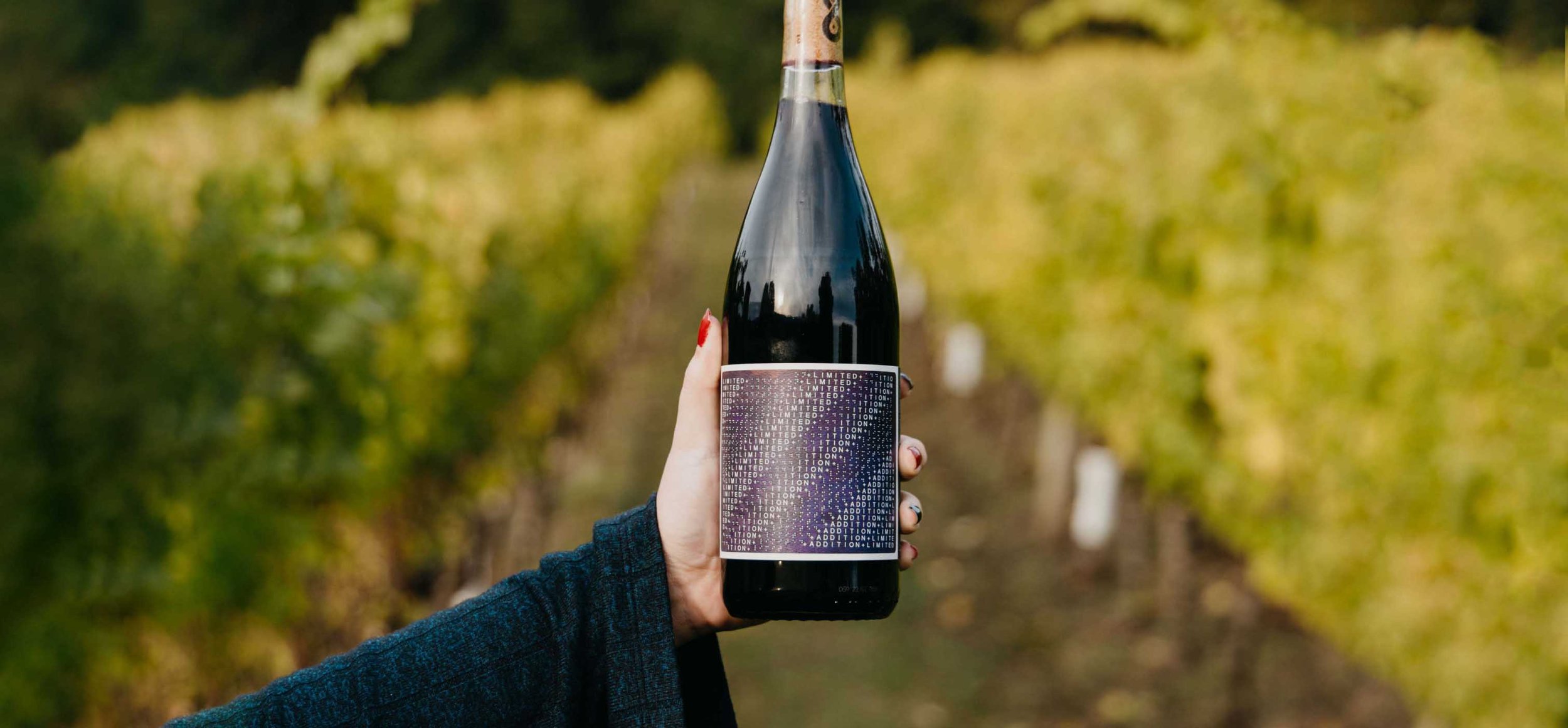
where it all begins
Our vineyards

a new take on an established region
The Willamette Valley
The Willamette Valley AVA has many varied soils, aspects, and hidden valleys to be explored.
We seek sites and relationships with farmers who share our interest in understanding what this winegrowing valley is capable of.
It is a privilege to farm these hills, and our work is committed to expanding the conversation around sustainable practices in the wine industry.
Our work in wine is not limited to farming philosophies; it is rooted in a deep commitment to the farmers and farmworkers who rely on this industry for their livelihoods. Every element of the wine industry is interconnected, and nothing is done alone.
For these reasons, and out of a desire to explore what is possible, we work to build a complex and healthy wine conversation in these hills.
By working with a diverse selection of varieties, labor can be extended throughout the growing season to provide economic security to both farmers and farmworkers by focusing on plantings of early, mid-, and late-ripening grapes.

where the grapes are grown
Vineyard sources
We work with inspired farmers across six Willamette Valley AVAs. These vineyards show us what the future varietal landscape of the Willamette Valley may look like.
Each AVA (American Viticultural Area) has its own unique features and expressions, helping us better understand which grape varieties have the most potential in each subregion of the valley.
-
The largest AVA in Oregon, both in total area and vineyard plantings, is dominated by three major soil types: ancient marine sedimentary ocean-uplifted soils, volcanic basalt soils, and windblown loess silt loams. The broad river valley of the Willamette is framed on both sides by protective mountain ranges: The high, imposing Cascade Mountains on its eastern boundary and the lower-lying Coast Range on its western flank, which serves as a buffer to the cold storms and winds that arise in the Pacific Ocean just 45 miles from the valley. While the Willamette Valley AVA officially stretches from Portland in the north to just beyond Eugene at its southernmost boundary, the majority of the vineyards we source from for Limited Addition are in the “North Valley,” where there are ten official subregions. We work with growers in at least six of these and are expanding each year.
-
The largest AVA in Oregon, both in total area and vineyard plantings, is dominated by three major soil types: ancient marine sedimentary ocean-uplifted soils, volcanic basalt soils, and windblown loess silt loams. The broad river valley of the Willamette is framed on both sides by protective mountain ranges: The high, imposing Cascade Mountains on its eastern boundary and the lower-lying Coast Range on its western flank, which serves as a buffer to the cold storms and winds that arise in the Pacific Ocean just 45 miles from the valley. While the Willamette Valley AVA officially stretches from Portland in the north to just beyond Eugene at its southernmost boundary, the majority of the vineyards we source from for Limited Addition are in the “North Valley,” where there are ten official subregions. We work with growers in at least six of these and are expanding each year.
-
The Chehalem Mountains AVA, home to some of the oldest vineyards and wineries in the Willamette Valley, consists primarily of marine sedimentary Willakenzie series soils that are free-draining and relatively nutrient-poor. Establishing cover crops is important for vine health in this AVA. The Chehalem Mountains Vineyard that we work with is farmed biodynamically and provides our Blaufränkisch, St. Laurent, Gamay Noir (358 clone), and Grüner Veltliner. It is a moderately high-elevation site, around 700 feet, that faces west toward the Ribbon Ridge AVA. The vineyard is a steep, hilltop farm surrounded by Douglas fir forest and farmlands. Wines from the Chehalem Mountains AVA tend to be elegant and perfumed, showing red fruit and spice flavors with silky tannin profiles.
-
The Yamhill-Carlton AVA is another region based around the free-draining, less vigorous Willakenzie marine sediment soil series. This amphitheater-shaped AVA is also one of the region’s warmest, as it stretches from the western boundary to its protected eastern slopes. The cool coastal wind influences tend to drop off around the west and south of the AVA, giving way to warmer eastern vineyard holdings east of the towns of Yamhill and Carlton. Some of the ripest, fruitiest styles of wine are made in this AVA, where ripening is never an issue and wines can easily develop power, structure, and dark blue and purple fruit profiles.
-
The Tualatin Hills AVA is one of the newer AVAs in the region, established in 2020, but it is home to some of the oldest vineyards, planted in the mid-1960s. This AVA is also one of the coolest, with its western edges sitting firmly in the coastal Tillamook corridor and the Gales Creek River valley, benefiting from the cooling influences of the Pacific Ocean. Its soils are a mixture of Laurelwood windblown loess on the higher elevations and east-facing hills, with volcanic basalt bedrock, producing wines of elegance and freshness. This AVA produces high-acid, vibrantly fruited wines and is particularly well suited to aromatic varieties such as Pinot Gris, Gewürztraminer, Muscat, and Riesling.
-
This ridge of hills extends north to south below the town of McMinnville, providing a very warm west-facing slope that captures the full impact of both the afternoon sun and the cooling winds that blow down the Van Duzer Corridor from the Pacific Ocean. The eastern side of these hills benefits from the gentle early morning sun that rises over the Cascades, creating a gradual warming during the growing season. Fruit in this AVA ripens later than fruit from the more northerly Chehalem Mountains and Ribbon Ridge AVAs. The bulk of the soils in this AVA are volcanic basalt, primarily Jory and Nekia (which is more shallow and rockier than Jory). Wines from this AVA tend to be very structured and darker in profile, with distinctive umami characters and compact tannins that can take time to resolve. These wines are complex, distinctive, and worthy of cellaring.
-
One of the few low-lying AVAs in the valley, the ancient marine sediment soils and riverbed terrain provide good drainage and reduce vigor, but the main character of the AVA comes from the cooling winds that sweep over the area, delaying ripening and flavor development. Wines from this region tend to be vibrant and high-toned, with both bright acidity and lively red fruits, and are typically lower in alcohol.


eola springs vineyard
Originally planted in 1972 by Carl Stevens, this site is positioned in the throat of the Van Duzer corridor which provides ample ventilation to temper the vines throughout the growing season and intensifies the sharp diurnal effect of the site with its cool nights and warm to hot days.
The vineyard’s diverse soils result from a geologic history of plate tectonics, volcanism, and glaciation. More recently, alluvial deposits and erosion have left their mark. While the AVA was established only in 2006, this pioneering vineyard has proven itself time and time again to be a jewel that continues to improve. Beyond the original 1972 planting, additional vines were added in 1980, 1984, 1990, 2006, and continue to be planted today, reflecting the evolution of the Willamette Valley.
Judy Jordan purchased the property in 2015, and her team is committed to exploring the possibilities of this great site beyond the plant material that was available when it was first established.
Appellation
Eola-Amity Hills
Varieties
Pinot Noir, Muscat, Chardonnay, Gamay, Pinot Gris, Cabernet Franc, Mencía, Chenin Blanc, Sauvignon Blanc
Aspect
Gradually sloping west, some southwest
elevation
300-450 ft
total acres
178
planted acres
100


ANDANTE Vineyard
The quality and diversity of soil types at Keeler Estate are an expression of the geologic history of the region. The soils are composed of well-drained glacial wash loams on the hillsides, including the Steiwer, Chehulpum, and Hazelair series. Much of the site consists of shallow sedimentary soils with underlying remnants of an ancient ocean bed. Some blocks have virtually no topsoil and are made up of sandstone full of fossilized sea creatures and mollusks.
In 1990, the Keeler family moved to their 200-acre property and, through many years of hard work, transformed what was once fields of brambles, blackberries, and rocky terrain into what it is today: a home and certified Biodynamic vineyard, with regenerative gardens and a reclaimed and now protected Oregon white oak forest.
The AVA was established in the same year the Keelers planted their vineyard, in 2006. Following matriarch Gabriel Keeler’s German heritage, the estate was planted to a variety of Pinot Noir, Pinot Gris, Riesling, and Chardonnay clones.
Appellation
Van Duzer Corridor AVA
Varieties
Pinot Noir, Chardonnay, Sauvignon Blanc, Aligoté, Gamay Noir, Marsanne
Aspect
Rolling slopes with varied sun exposure
elevation
200 ft
Planted acres
15
SOIL TYPE
Shallow marine sedimentary silty clay loam over siltstone bedrock
CERTIFICATIONS
LIVE Certified; organically farmed

Tsai vineyard
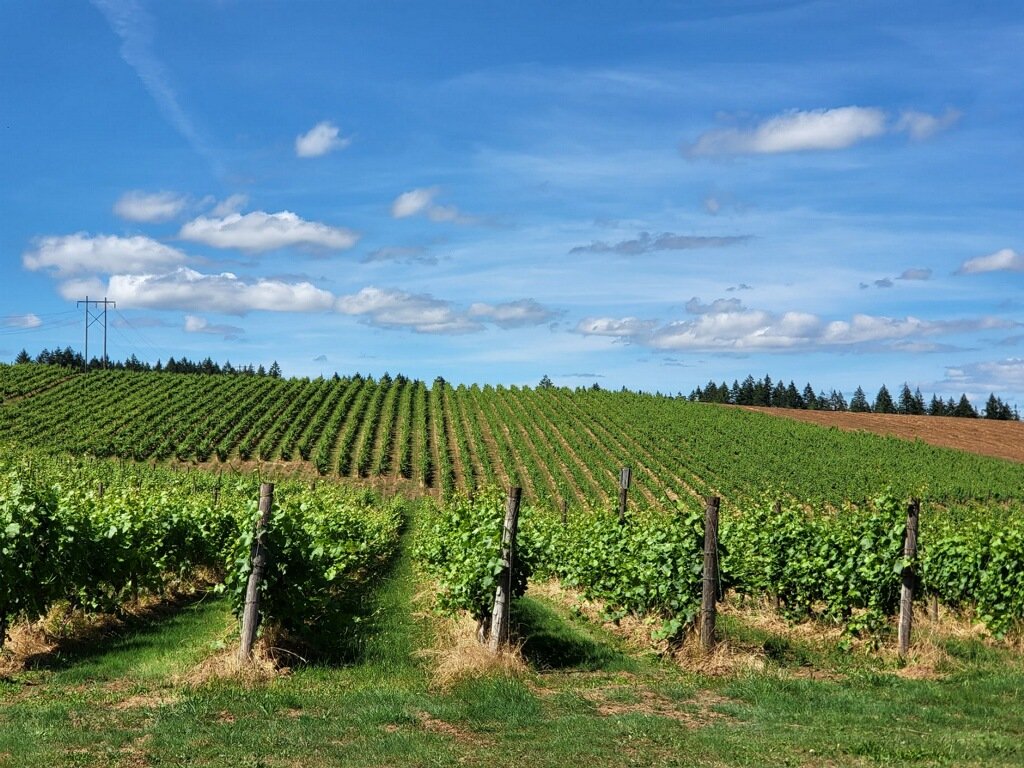
We consider the beautiful Tsai Vineyard to be our home vineyard site. It is surrounded by forest and organically farmed hazelnuts and captures the cooling afternoon winds that blow through the Coast Range.
This is a surprisingly late-ripening site considering its deep marine sediment soils, and it produces distinctive Pinot Gris, Pinot Blanc, and heirloom-clone Pinot Noir. Surrounded by beautiful old oak and fir trees, Tsai Vineyard consists of 8.7 acres of Pinot Gris, 7.2 acres of Pinot Noir, 3.4 acres of Pinot Blanc, and 3.4 acres of Chardonnay.
Originally known as Elvenglade, the vineyard was the magnum opus of Bill Kelley, a techie turned winemaker, who followed his dream of life on an Oregon vineyard. He first planted Pinot Gris in 1986, then expanded into other varietals in 1998 after consulting with Joel Myers and David Lett on vineyard design and farming techniques. Bill planted each of his vines himself and was personally involved in every aspect of his vineyard, from pruning and canopy management to nutrition and harvest.
During this time, Bill mainly sold his fruit to local wineries. He had a short stint producing wine under his own label, receiving accolades across various wine competitions, but he ultimately returned to selling his fruit each year as his dreams changed. Current owners Jason and Cheryl hope to continue the story of this beautiful vineyard. It sits on an incredible piece of land in the Yamhill-Carlton AVA, famous for its perfect temperature, geology, and rainfall for producing world-class wines. We promise to nurture the vineyard and its fruit to the splendor it deserves.
Appellation
Yamhill Carlton AVA
Varieties
Chardonnay, Pinot Blanc, Pinot Gris, and Pinot Noir
Year planted
1986
elevation
700-900 ft
Soil Type
Marine Sediment

Abbey Road Farm
Acquired by Daniel and Sandi Wilkens in 2017, Abbey Road Farm is an 82-acre working farm in the Yamhill-Carlton AVA, with 42 acres planted to an unusually diverse collection of 16 grape varieties. The vineyard combines organic farming with a broader regenerative approach designed to encourage biodiversity and build long-term soil and vine health.
The northeast-facing vineyard forms a gently sloping amphitheater on well-drained marine sedimentary soils. Afternoon winds move through the site, moderating temperatures and encouraging slow, even ripening. Its position and deeper sedimentary soils also provide useful water-holding capacity through Oregon's increasingly warm, dry summers.
Abbey Road Farm is particularly compelling for its commitment to varietal diversity. Alongside Pinot Noir and Chardonnay are varieties still uncommon in the Willamette Valley—including Mencía, Godello, Mondeuse, Grüner Veltliner and both Trousseau Noir and Trousseau Gris—making the vineyard an important testing ground for what the future of Oregon wine might look like
Appellation
Yamhill Carlton AVA
Varieties
Pinot Noir, Chardonnay, Gamay Noir, Pinot Meunier, Cabernet Franc, Mencía, Mondeuse, Trousseau Noir, Trousseau Gris, Chenin Blanc, Godello, Grüner Veltliner, Aligoté, Riesling, Sauvignon Blanc, Muscat
Year planted
2018
Aspect
Northeast
Planted ACres
42
Soil Type
Willakenzie marine sedimentary soils
CERTIFICATIONS
Certified Organic grapes; regenerative organic farming practices

FOREST HILLS Farm
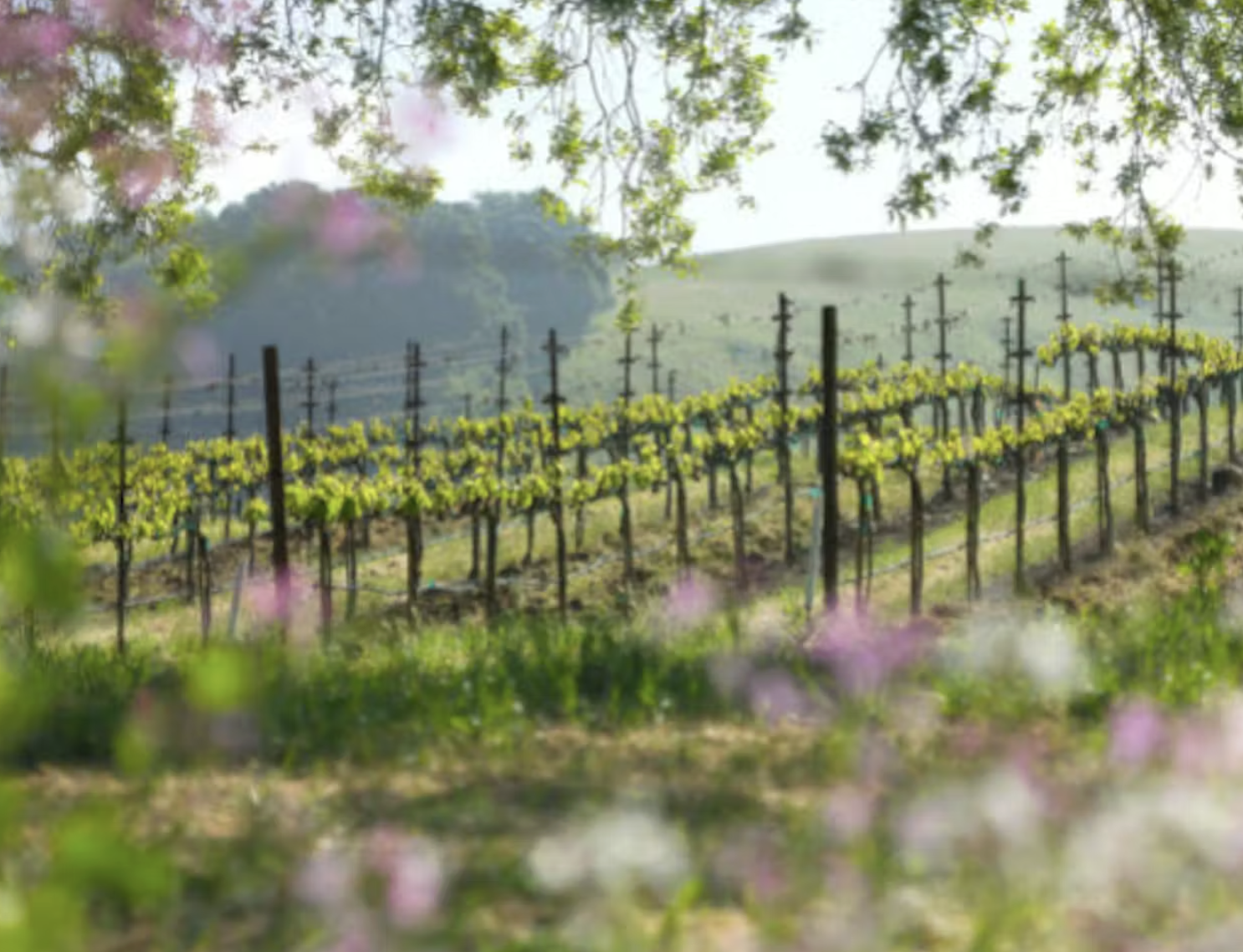
Forest Hills Farms is a multigenerational family farming operation based in Cornelius, Oregon. The Jesse family has farmed the property for decades, building a highly diversified agricultural business encompassing wine grapes, berries, grains and other crops. Wine-grape planting began in 2009, and today approximately 120 acres are divided among seven vineyard sites in the northern Willamette Valley.
The vineyards lie within the Chehalem Mountains and Laurelwood District, where the landscape ranges across different elevations and exposures. Much of the district is defined by Laurelwood soils—windblown loess layered over basalt—which combine good water-holding capacity with drainage and moderate vine vigor.
Forest Hills approaches wine grapes through the same long-term agricultural lens it applies across the farm. Vineyards are dry-farmed and managed with no-till practices, while selected sites are farmed organically and without herbicides. The result is less a single uniform vineyard than a network of distinctive sites connected by a philosophy of crop diversity, soil stewardship and multigenerational farming.
Appellation
Chehalem Mountains & Laurelwood District AVAs
Varieties
Pinot Noir, Pinot Gris, Chardonnay, Sauvignon Blanc, Gamay Noir, Cabernet Franc, Aligoté, Melon de Bourgogne
Year planted
2018
Aspect
Varied across seven vineyard sites
Planted ACres
Approximately 120 acres
Soil Type
Predominantly Laurelwood-series loess over basalt; varies by site
ELEVATION
Varies by vineyard site
CERTIFICATIONS
Dry-farmed, no-till; selected vineyards farmed organically and without herbicides; Forest Hills farm operation is GlobalG.A.P. certified

CONCINNITAS Farm
Concinnitas Farm is a certified-organic fermentation farm in the Yamhill-Carlton AVA, conceived from the outset around the characteristics of its site rather than a predetermined set of grape varieties. The vineyard occupies just over 15 acres of an undulating, amphitheater-shaped hillside, where changes in slope, exposure and wind create distinct growing conditions from block to block.
The vineyard is rooted in Bellpine, an ancient marine sedimentary soil formed from weathered sandstone. These compact, nutrient-poor and freely draining soils encourage deeply rooted vines, while cool afternoon coastal winds moderate the site's naturally warm position within the valley. Organic farming and dry farming are central to the estate's approach, with soil health, biodiversity and long-term resilience considered part of wine quality rather than separate sustainability goals.
Varieties were selected for their relationship to the site: long ripening curves, naturally retained acidity and the ability to develop flavor at moderate sugar levels. The result is one of the Willamette Valley's most diverse vineyards, drawing inspiration from the Loire, northern Spain, Burgundy and the Jura while remaining deliberately focused on what each variety can express here in Oregon.
Appellation
Yamhill-Carlton AVA
Varieties
Aligoté, Chenin Blanc, Gamay Noir, Godello, Mencía, Savagnin, Albariño, Arinto, Loureiro, Trousseau Noir, Garnacha Tinta, Pinot Noir, Chardonnay, Juan García, Castelão
Year planted
2018
Aspect
Varied amphitheater slopes; predominantly southern and eastern exposures
Planted ACres
Just over 15 acres
Soil Type
Bellpine — ancient marine sedimentary sandstone
ELEVATION
Approx. 325–425 ftVaries by vineyard site
CERTIFICATIONS
CCOF Certified Organic / USDA NOP; dry-farmed regenerative practices
Johan vineyard
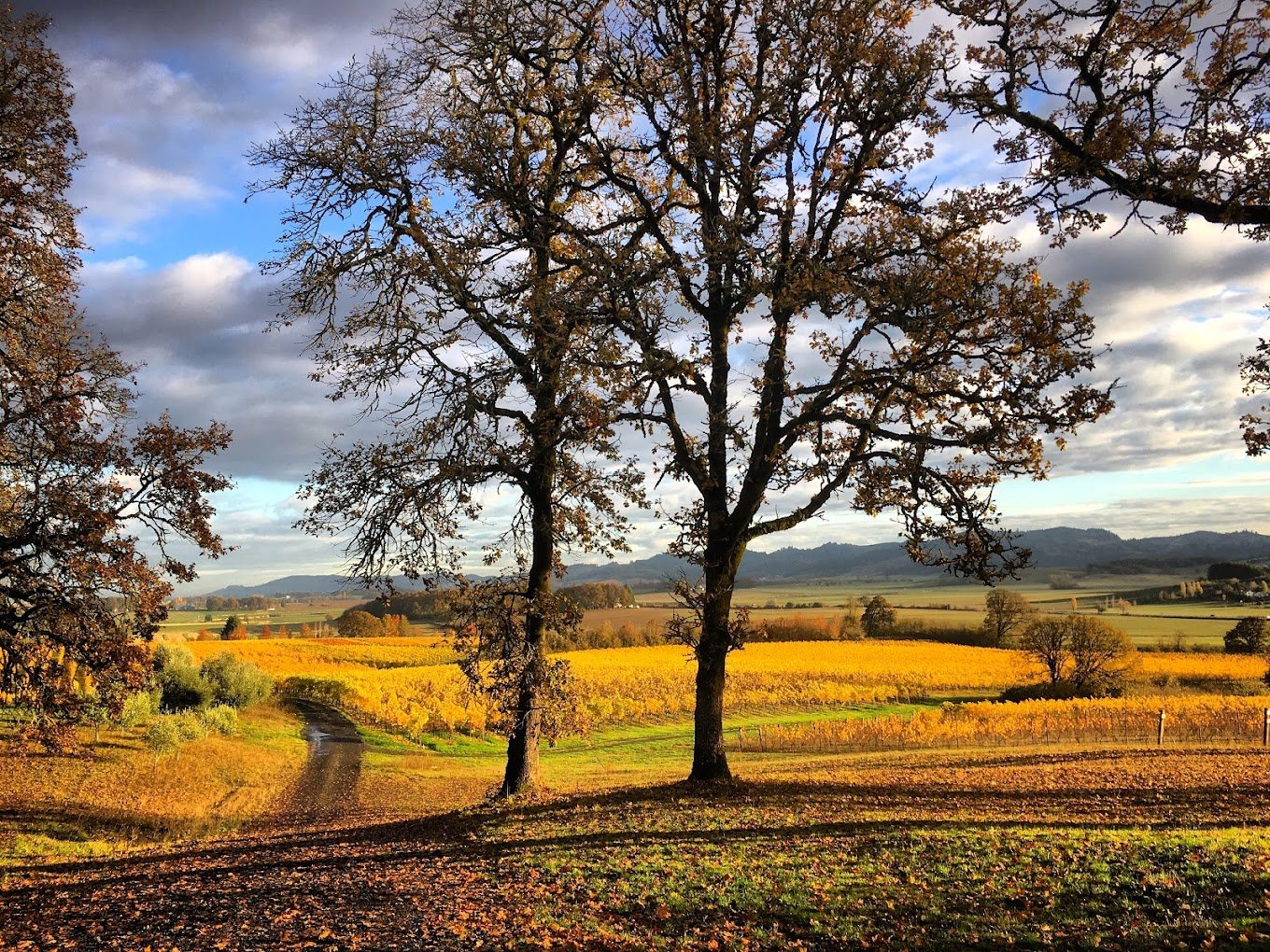
Located in Oregon’s Willamette Valley, within the Van Duzer Corridor AVA, Johan Vineyards is an 85-acre certified Biodynamic® estate winery. Our goal is to create a self-sustaining holistic farm system with the vitality to produce an honest expression of itself to share with others. We maintain over 30 acres as a biodiversity preserve, which includes virgin oak savannah and biologically active riparian zones. Johan Vineyards is one of five bonded wineries within the newly established Van Duzer Corridor AVA. The unique growing conditions in our viticultural area yield wine grapes with a compelling expression of Oregon’s sense of place.
Our calcareous sedimentary soils with non-native erratic granite contrast with our easterly neighbors’ iron-rich volcanic soils; we see a greater pH buffering capacity in our soils, which is conducive to a healthy and diverse soil microbiome. The resulting wines from our site have exotic and complex aromatics with a balancing acidic structure and tension.
In addition to the soil characteristics, our site is shaped by the unapologetic and persistent coastal winds. Each day, the sun heats the valley floor and causes a “heat-sink” effect. This differential draws maritime air through the Coast Range directly across our site. Annually, we see 30–40% greater daily wind speeds compared to our neighbors in the North Willamette Valley.
Appellation
Van Duzer Corridor AVA
Varieties
Pinot Noir, Mondeuse, Chardonnay, Kerner, Cab Franc
Year planted
1986
elevation
200-400 ft
Soil Type
Marine Sediment

Aurora Vineyard
This is the Ponzi home vineyard, which faces due east and wakes to views of the majestic, snow-capped Mount Hood. It is planted with own-rooted Arneis and Dolcetto obtained from the Vietti property in Barbaresco; Pinot Gris, Pinot Noir, Muscat, and Gewürztraminer are also planted.
We are honored to work with these organically farmed old vines, which are the pride of the Ponzi family visionaries.
Appellation
Laurelwood District
Varieties
Pinot Noir, Chardonnay, Pinot Gris, Arneis, Dolcetto, Gewurztraminer, Muscat
Year planted
1991
elevation
300-600 ft
Soil Type
Laurelwood
Chehalem Mountains Vineyard
This historic vineyard was the first vineyard planted in the Chehalem Mountains, established in 1968 by Willamette Valley wine pioneer Dick Erath.
Today, only two blocks remain from Dick’s original plantings, although they are rapidly succumbing to phylloxera. This vineyard has plantings spanning every decade since the initial 1968 blocks were established and is planted primarily to Pinot Noir, with more than a dozen different clones, and Chardonnay, including Burgundian and Californian heirloom selections. In 2016, under the ownership of California’s Judy Jordan, the vineyard began experimenting with alternative varieties like Grüner Veltliner, Gamay Noir, Blaufränkisch, and St. Laurent. It is these varieties, along with four selections of Hyde-clone Chardonnay, that we work with from this site.
For us, the site’s modest elevations, east to west slopes, and deep ancient marine sedimentary soils are ideal for growing aromatic varieties, which include all but the Chardonnay and Pinot Noir. These varieties on this site are proving to be some of the most exciting and exceptional grapes we work with. Now, under the respected biodynamic farming philosophies upheld by new owner Barbara Gross, we expect that these young vines will grow into sensational plants.
Appellation
Chehalem Mountains AVA
Varieties
Chardonnay, Pinot Noir, Blaufrankisch, Gruner Veltliner, St. Laurent, Gamay Noir
Yar Planted
1968 and 2018
elevation
400-800 ft
Soil Type
Willakenzie Marine Sediment
Farming
Biodynamically farmed

WIRTZ Vineyard
Planted by David Wirtz in 1974, Wirtz Vineyard is one of the northern Willamette Valley's important surviving old-vine sites. Fourteen acres of the 24-acre property contain self-rooted vines established from material sold by Charles Coury's nursery and other pioneering Oregon vineyards. Historic plantings include Pinot Gris, heirloom Pinot Noir selections, Gamay Beaujolais and what is believed to be Draper clone Chardonnay.
The vineyard is predominantly east-facing, with upper blocks turning toward the south, and is rooted in Laurelwood soil: wind-deposited loess over ancient basalt. These deep, silty soils are one of the defining features of the Tualatin Hills and contribute to the vineyard's ability to support dry-farmed, own-rooted vines more than half a century after planting.
Today Wirtz is farmed to LIVE standards with an emphasis on biodiversity, reduced chemical inputs and the preservation of its historic plant material. Beyond its age, its significance lies in the genetic record contained within the vineyard—a living connection to Oregon's formative viticultural period of the 1960s and 1970s.
Appellation
Tualatin Hills AVA
Varieties
Pinot Noir, Pinot Gris, Chardonnay, Gamay Beaujolais, Riesling, Gewürztraminer and other historic white varieties
ASPECT
Predominantly east-facing; upper blocks south-facing
elevation
250 ft
Planted Acres
14 planted acres / 24-acre property
Certifications
LIVE Certified; dry-farmed
Soil Type
Laurelwood soil — windblown loess over basalt

Neahring Vineyard
An unexpectedly premium-quality site for Pinot Meunier, Gamay Noir, and several selections of rare Chardonnay clones, this site sits at a low elevation in the foothills of the Cascade Mountains in the Canby region of the Willamette Valley. These floodplain soils provide vibrancy and vigor, along with ample water for these young, organically farmed vines.
Our first vintage with them was in 2023, and we were so impressed with the aromatics and nutrient-rich grape composition that produced vibrant, healthy ferments.
Appellation
Willamette Valley
Varieties
Pinot Meunier, Gamay Noir, Chardonnay
Year planted
2020
elevation
100-200 ft
Soil Type
Missoula Flood

Jubilee Vineyard
Jubilee Vineyard is a 140± acre site tucked away in the Eola-Amity Hills of the Willamette Valley. The area is characterized by rolling hills and diverse microclimates, which contribute to the production of high-quality wines. Jubilee Vineyard is LIVE certified, with a total of 32± acres under trellis. Blocks of Pinot Noir, Chardonnay, Gamay, and Dolcetto stretch across the hills of this property.
Jubilee Vineyard specializes in dry-farming techniques, taking advantage of the cool marine air from the Pacific Ocean, which is funneled through the Van Duzer Corridor and provides a unique cooling effect on the vineyards during the warm summer months.
Thanks to this diurnal temperature variation, the warm days and cool nights help develop complex flavors in the grapes, particularly during their final ripening stages. Eola-Amity Hills is an established and highly sought-after American Viticultural Area (AVA).
Appellation
Eola-Amity Hills
Varieties
Chardonnay, Dolcetto, Gamay Noir, Pinot Noir, Malbec
Year planted
1998
elevation
400-800 ft
Soil Type
Volcanic Nekia

Vitae Springs-certified organic
Vitae Springs is a historic vineyard that is family-owned and operated. The oldest vines on the property were planted in 1978 from “suitcase cuttings” brought from Germany. The historic Grüner Veltliner, Riesling, Müller-Thurgau, and Pinot Gris vines here are among the oldest of their kind planted in the country.
Since purchasing the vineyard in 2018, the Freund family has been dedicated to converting the land into a truly sustainable farm. We are focused on limiting inputs to the farm system and sourcing any necessary inputs as locally as possible.
Our practices aim to nurture diverse ecosystems and limit waste. More information about the vineyard can be found here.
Appellation
Willamette Valley
Varieties
Pinot Noir, Pinot Gris, Grüner Veltliner, Riesling, Müller-Thurgau
Year planted
1978
elevation
800-1100 ft
Soil Type
Volcanic Nekia

Witness Tree Vineyard
Witness Tree Vineyard faces southeast, benefiting from the gentle morning sun that wakes the vines and dries the canopy, reducing humidity.
Every planted row is optimally angled to either maximize or mitigate the more intense sun exposure to the south. Moving up the hill, the vineyard is divided into three distinct sections, each at a different elevation, with a unique soil profile, and producing three distinct quality categories of grapes.
The lower section (28.95 acres across 18 blocks) consists of 15,000-year-old alluvial soils. This fertile soil, derived from ancient river silt and sedimentary deposits, drains well, which elevates grape concentration and aromatics even at the relatively lower altitude at the bottom of the hill.
Appellation
Willamette Valley
Varieties
Aligote, Chardonnay, Pinot Noir
Year planted
1982, 2019 plantings replaced phylloxera impacted vines
elevation
200-800 ft
Soil Type
Volcanic Nekia, Willakenzie Marine Sediment, Alluvial River wash
The middle section (16.94 acres across 9 blocks) consists largely of Willakenzie soils. Willakenzie is a marine sedimentary soil that is drier, sandier, and more well-draining than any other soil type in the vineyard. Because it does not retain as much moisture as the lower or upper block soils, the vines here root to greater depths. This can lend more structure and boldness to the grapes, since the vines must work harder for moisture and naturally produce lower yields.
The upper section (10.61 acres across 16 blocks) sits at over 600 feet of elevation and is composed of the “famous red clay” of the Willamette Valley, consisting of ancient Nekia and Jory soils, which are basalt-based soils derived from ancient lava flows.
Jory contributes the classic red hue of Willamette clay, being high in iron. Its clay content aids in water retention. Paired with Nekia, which is also volcanic but more quickly draining, the vines are able to find a balance between too-wet or too-dry, too-fertile or infertile conditions. Coupled with the higher elevation and ample sun, many blocks in this section are otherworldly in their profile of expression.
AVA: Willamette Valley
Extremely granular analysis of the soil was done after the vineyard’s original planting from 1982 was mostly destroyed by a phylloxera outbreak in 2016. In 2017, geologist Pedro Parra and the farming team, led by vineyard manager and world-renowned viticulturist Ryan Hannaford, completed a comprehensive terroir and soil analysis. This maximized soil fertility for each varietal, clone type, and planting method in preparation for a 2019 replanting. The team extracted 37 soil samples from points of optimal composition in the vineyard and identified 9 major “terroir units” (soil base types) with specific fertility and drainage characteristics. After the analysis, the team crafted a custom vineyard design, block by block, and proposed 22 different blocks, each tailored with specific clone variations of Pinot Noir or Chardonnay to optimally grow in and express the soil type. Two types of spacing were also employed in the blocks, depending on elevation and soil depth:
7-foot (row width) by 4-foot (between vines) spacing was used for blocks with deeper soils, along with deeper-rooting rootstock to match.
6-foot by 3-foot spacing was used for shallower soils, paired with rootstock suited to less soil depth.